Showing posts with label Buyer Tips. Show all posts

TEN Questions to Ask your Broker...

0 comments

These are tough times; run away from any broker that tells you otherwise. In the midst of the curent mess there are opportunities, however. Values have come down dramatically and in many cases they are below replacement costs.

Replacement cost is a key indicator of intrinsic value. As savvy investor Warren Buffett knows too well,

...if you buy below intrinsic value, you will eventually make money, no matter what.
It may not be tomorrow, but when something is acquired at prices below intrinsic value, the risk to the downside is much smaller than the potential upside.

For those that recognize opportunity when everyone else is running away here are the ten most important questions to ask your broker before making that offer.


Read full post >>

Making An Offer They Can't Refuse...

1 comments

When Buying Real Estate, Make an Offer they Can't RefuseWhen the demand for houses in a sizzling marketplace outweighs the supply of houses available, many consumers think the highest offer is a sure-fire way to claim ownership of their dream home. Similarly, in a panic-mode housing market such as the one we have right now, the old axiom “Analysis Paralysis” becomes an obstacle to getting the deal you want. While you wait for the prices to hit “bottom”, the savvy buyers snap-up the property you really want. The professionals at KARLHAUS REALTY™ know that bidding for a house doesn't always require upping the stakes and that the “bottom” is an ephemeral quantity as no one ever knows the bottom of a cycle until it has passed by. In the end, it comes to well-informed negotiation. Negotiation is not just offering less than the Seller is asking and waiting for a “yes” or “no”. Negotiation is a trade off of value, timing and intangible benefits between the two parties to arrive at equilibrium of terms that both are willing to accept.


Be Flexible


One tactic that works in any market is to accommodate the seller as much as you are able. As a buyer, you have to be flexible and willing to sacrifice a bit. Whether it's being willing to close one month earlier or later, do your best to meet the seller's desired closing time. Additionally, be willing to overlook the more minor and but less-than-perfect characteristics of a given home because other prospective buyers may not be able or willing to do so. If the seller is under pressure and wants the house sold quickly, they'll prefer to work with the buyer that can accommodate them the most.

Be Prepared


If you are willing to make the investment, then you must be a qualified, solid, desirable buyer. Get a copy of your credit report and settle any debts that may be outstanding. "You'd be surprised how many people get turned down for a loan because of an old debt they had forgotten all about." Get pre-approved for loans and mortgages. Sellers want and need a willing and able buyer, someone who is stable and ready to make a commitment to the property; and that after making the commitment, can carry it through to closing without problems. Going into the negotiation process as a pre-approved buyer puts you at a major advantage.

Connect with the seller


Create a rapport with the seller and let them know why you prefer their house to others. Homeowners are emotionally connected to their home. Even when selling their home, they often feel tied to the integrity of the house. They have likely spent a large portion of their lives within its walls. Often, fond memories of the family are interconnected to their home. Because the seller loves the house, they are usually inclined to sell it to someone who will love it too.

Clean, simple offers are best


Eliminating as many contingencies as possible will give you an advantage when involved in a bidding war. If you have a home to sell before purchasing, sell it first. Reducing uncertainty makes the buyer more appealing to the seller and will create leverage for the buyer.

Show them the money


Be willing to increase the size of your down payment or make an all cash offer. Sometimes the best way to win a bidding war and avoid paying a higher price is to increase your down payment. Sellers favor strong buyers, if you can afford to make an all cash offer, do so. That's almost always a definite way to slam-dunk a sale and it certainly does not preclude you from getting financing later if desired.

Work with the best in the business


Be sure to choose a sales associate who has an excellent reputation with other agents. Working with a KARLHAUS REALTY™ Associate who is known in the industry for their knowledge, integrity, professionalism, and credibility will always work in the buyer's favor. We at KARLHAUS REALTY™ at the Spruce Creek Fly-in not only sell the Fly-in lifestyle, we live it!

Read full post >>

What is This Home Worth? Use ValueMap™ for Quick Estimates!

0 comments

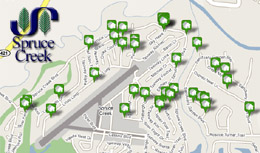
Karlhaus Realty at Spruce Creek, Value MapKarlhaus Realty has implemented Realist ValueMap™ and is now available free to its customers through its Spruce Creek Real Estate web site. The ValueMap tool provides quick automated estimates of a property's worth according to recent sales and several statistics from public records and the MLS® databases.

The Karlhaus ValueMap provides you with 24/7 access to the complete spectrum of property information-covering 97% of U.S. real estate transactions. The system is much more than a simple valuation tool. With it you can:

• Enter a home address and ValueMap instantly provides the estimated value of the home
• Determine the estimated value of adjacent homes
• Allow users to adjust home facts and re-calculate a home’s value
• View nearby homes for sale
• View similar homes in the area that have recently sold and for how much

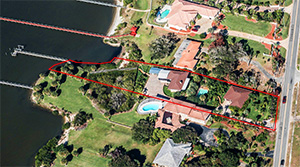
More than a home valuation site, Realist ValueMap brings all of this to life with highly interactive mapping features such as: up-to-date street maps, Bird’s Eye and Aerial imagery, and even parcel lot lines.

While a more precise value assessment can only be obtained by a professional, the Karlhaus ValueMap is a good first step in gauging the value of your property in comparison to your neighbor's. This tool in combination with the services of a Karlhaus Agent can be a valuable resource in estimating the value of a property, whether you are a Buyer or a Seller.

Karlhaus CEO, Carlos Bravo said that while the ValueMap tool is still new and can be somewhat inaccurate in estimating the value of unique properties such as those in the Spruce Creek Fly-in, it does have value in assessing relative worth when a property is compared to another. He added that "the ability to display nearby sales data and listings for sale as well as the virtual imagery makes it a very useful tool for our customers". "Today's Buyers do a lot of their real estate research through the internet thanks to the wide availability of information", Bravo said.

Karlhaus has access to the latest sales data and market trends, not only for properties sold through the MLS® but for all properties, including For Sale by Owner (FSBO), direct sales and trades in Spruce Creek, Port Orange, and anywhere else in Florida. This information is essential and, when combined with our expertise and negotiating advice, ensure the best possible deal for Karlhaus clients whether they are Buying or Selling.

According to Bravo, Web 2.0 and Web 3.0 technologies are disrupting the way real estate business is transacted. "Through the Karlhaus Realty sites, a Buyer might as easily be shopping for a home in Spruce Creek while drinking his afternoon coffee in Germany, and at the same time another Buyer in Spain is enjoying some virtual browsing as if he was driving down the streets of Port Orange, using the street view features of the Karlhaus Map-Based Property Search."

True to its mission at the forefront of internet technology to provide the best real estate marketing tools to its customers, Karlhaus moves forward yet another step in its Total Web Supremacy™ in the marketing of Spruce Creek Fly-In properties.

See the Karlhaus ValueMap in action: What is my Spruce Creek Home Worth?

Read full post >>

Buying Foreclosures, Port Orange, Spruce Creek

0 comments

In times of adversity, there's opportunity but Buyer Beware is the name of the game. Make sure you go in with a trusted and knowledgeable advisor. Clark Howard from CNN has helpful tips for buying foreclosures.


Daytona Beach Foreclosures


Port Orange Foreclosures


Ormond Beach Foreclosures


New Smyrna Beach Foreclosures


Ponce Inlet Foreclosures

Read full post >>

The Buying Process and the HUD-1 Closing Statement

2 comments

HUD's Buying Your Home: Settlement Costs and Helpful Information. Essential guide to understanding the process of buying a home and deciphering the standard HUD-1 Settlement Statement.

Read full post >>

Volusia County, Florida Property Tax Estimator

1 comments

Property Taxes in Florida are an important consideration in estimating your total cost of ownership. In Volusia County there are several taxing districts; Municipalities such as Daytona Beach or Ormond Beach have their own millage rates. Properties in unincorporated areas of Volusia County usually have lower rates. The Spruce Creek Fly-in is located in unincorporated Volusia County.


Florida has a number of exemptions that you may be eligible for. There are several initiatives to reduce property taxes and that, if passed, will provide relief for many homeowners. Visit the Volusia County Property Appraisers Office for details.


Read full post >>

Get mortgage with zero points or pay points to buy down the rate?

0 comments

When banks quote loans, they often include several rates with various "points". The term points has multiple meanings in the mortgage world. Mortgage points can refer to loan origination fees (fees charged by the underwriter) or discount points (also known as loan discounts). A point is 1% of the loan amount. Paying discount points allows you to "buy down" your interest rate. Consider points as prepaid interest. The tricky part is trying to identify the best deal among different interest rates and different points.


Points are only a good option if you plan to keep the mortgage long enough to gain from the lower finance charges - as the cumulative savings will eventually cover the additional cost of paying the points upfront - and then some. Often you will find that getting a "zero-point" loan works best for those looking to refinance or sell in a few years.

As a rule of thumb, for a typical 30-year mortgage, each point you pay up front is worth about 1/8 of a percent off your interest rate. Since these points are interest payments, they're usually tax-deductible.

Generally speaking, it takes about five to seven years to recoup the cost of paying a point upfront. Here's the math. Let's say you take out a $100,000 30-year fixed mortgage, and you have the option of either paying 6% with no points or 5 3/4% with one point. With the 6% mortgage, your monthly payment will be $600. And with the 5 3/4% loan, it would be $584, a savings of $16 per month. After about 62 months, or a little over five years, you would have recouped the $1,000 point you paid upfront. And then you would start to benefit from the lower monthly payments.

But you must also consider how you might otherwise invest that $1,000. If you can beat the taxable equivalent of your mortgage rate (about 8% in the example above for those in the 25% tax bracket) then don't bother paying points. Invest the money instead.

This calculator can serve as a guide to compare different loan rates and point options to find the best alternative.


Read full post >>

Compare Average Home Prices Between Cities

0 comments

Try this handy utility based on the Trulia© database that allows you to compare the average home values and trends between any two cities in the United States.

Compare Home Prices Between Two Cities

Read full post >>

VULTURE Investing in Real Estate, a Viable Opportunity

0 comments

In many parts of the country, housing prices are falling at double-digit rates. Florida has been hit hard since it lead in the price increases party of 2000-2005. This bad situation for homeowners represents a possible opportunity for savy investors. Money reporter Stacy Johnson explores what's next, and who might benefit...


Read full post >>

How to Improve your CREDIT SCORE

0 comments

The ever important credit scores and how you can improve your own by a few simple steps.


Read full post >>

Four Things That Can Help or Hurt Your CREDIT SCORE

0 comments

Your credit score is composed of many factors that depend on your credit history. Watch this video on how four of these factors can affect your credit score and prevent you from obtaining the best mortgage loan rates.


Read full post >>

The Real Estate Market Today

0 comments

Watch Suze Orman explain the advantages and disadvantages of the current economic conditions when you need to Buy or Sell your real estate.


Read full post >>

Is NOW The Time To BUY Real Estate?

0 comments

Watch Suze Orman talk about the buying opportunities presented by the current real estate slump. History has proven over and over that the most successful investors are those that buy when everyone is selling and sell when everyone is buying.


Read full post >>

What is a FICO Score? by Suze Orman

0 comments

Watch this video of Suze Orman explaining what a FICO score is and its effect in the interest rate you get from your lender.


Read full post >>

GLOSSARY of Common Mortgage Terms

0 comments

Karlhaus Realty™ has assembled this list of Common Mortgage Terms to assist you in your understanding of industry terms and concepts.


To add a term or ask a question, please


A  B  C  D  E  F  G  H  I  J  L  M  N  O  P  Q  R  S  T  U  V  W  Z  


A

A historical summary provided by a title insurance company of all records affecting the title to a property.
acceleration clause

Allows a lender to declare the entire outstanding balance of a loan immediately due and payable should a borrower violate specific loan provisions or default on the loan.

adjustable rate mortgage (ARM)

A variable or flexible rate mortgage with an interest rate that varies according to the financial index it is based upon. To limit the borrower's risk, the ARM may have a payment or rate cap. See also: cap.

amenities

Features of your home that fit your preferences and can increase the value of your property. Some examples include the number of bedrooms, bathrooms, or vicinity to public transportation.

amortization

The liquidation of a debt by regular, usually monthly, installments of principal and interest. An amortization schedule is a table showing the payment amount, interest, principal and unpaid balance for the entire term of the loan.

annual cap

See: cap.

annual percentage rate (A.P.R.)

The actual interest rate, taking into account points and other finance charges, for the projected life of a mortgage. Disclosure of APR is required by the Truth-in-Lending Law and allows borrowers to compare the actual costs of different mortgage loans.

appraisal

An estimate of a property's value as of a given date, determined by a qualified professional appraiser. The value may be based on replacement cost, the sales of comparable properties or the property's ability to produce income.

appreciation

A property's increase in value due to inflation or economic factors.

A.P.R.

See: annual percentage rate.

ARM

See: adjustable rate mortgage.

assessment

Charges levied against a property for tax purposes or to pay for municipality or association improvements such as curbs, sewers, or grounds maintenance.

assignment

The transfer of a contract or a right to buy property at given rates and terms from a mortgagee to another person.

assumption

An agreement between a buyer and a seller, requiring lender approval, where the buyer takes over the payments for a mortgage and accepts the liability. Assuming a loan can be advantageous for a buyer because there are no closing costs and the loan's interest rate may be lower than current market rates. Depending on what is in the mortgage or deed of trust, the lender may raise the interest rate, require the buyer to qualify for the mortgage, or not permit the buyer to assume the loan at all.

Back to top

B

Mortgage with a final lump sum payment that is greater than preceding payments and pays the loan in full.

biweekly mortgage

A loan requiring payments of principal and interest at two-week intervals. This type of loan amortizes much faster than monthly payment loans. The payment for a biweekly mortgage is half what a monthly payment would be.

bond

A certificate serving as security for payment of a debt. Bonds backed by mortgage loans are pooled together and sold in the secondary market.

bridge loan

A loan to "bridge" the gap between the termination of one mortgage and the beginning of another, such as when a borrower purchases a new home before receiving cash proceeds from the sale of a prior home. Also known as a swing loan.

broker

An intermediary between the borrower and the lender. The broker may represent several lending sources and charges a fee or commission for services.

buy-down

Where the buyer pays additional discount points or makes a substantial down payment in return for a below market interest rate; or the seller offers 3-2-1 interest payment plans or pays closing costs such as the origination fee. During times of high interest rates, buy-downs may induce buyers to purchase property they may not otherwise have purchased.


Back to top

C

A limit in how much an adjustable rate mortgage's monthly payment or interest rate can increase. A cap is meant to protect the borrower from large increases and may be a payment cap, an interest cap, a life-of-loan cap or an annual cap. A payment cap is a limit on the monthly payment. An interest cap is a limit on the amount of the interest rate. A life-of-loan cap restricts the amount the interest rate can increase over the entire term of the loan. An annual cap limits the amount the interest rate can increase over a twelve-month period.

certificate of reasonable value (CRV)

A Veteran's Administration appraisal that establishes the maximum VA mortgage loan amount for a specified property.

certificate of title

Document rendering an opinion on the status of a property's title based on public records.

closed-end mortgage

A mortgage principal amount that is fixed and cannot be increased during the life of the loan. See also: open-end mortgage.

closing costs

Costs payable by both seller and buyer at the time of settlement, when the purchase of a property is finalized. These costs can be up to ten percent of the mortgage amount and usually include but are not limited to the following:

Fees Paid to the Lender

Fees Paid in Advance

Other Charges

Origination fee
Discount points
Credit report fee
Appraisal fee
Assumption fee if loan is assumed

Interest from the closing date to the beginning of the 1st payment
Hazard insurance premium
Mortgage insurance premium

Title search and title insurance
Sales commissions
Legal and recording fees
Inspection and survey fees
Property taxes and other adjustments
Processing and document preparation fees

A claim to the title of a property that, if valid, would prevent a purchaser from obtaining a clear title.

collateral

Something of value pledged as security for a loan. In mortgage lending, the property itself serves as collateral for a mortgage loan.

commitment fee

A fee charged when an agreement is reached between a lender and a borrower for a loan at a specific rate and points and the lender guarantees to lock in that rate.

co-mortgagor

One who is individually and jointly obligated to repay a mortgage loan and shares ownership of the property with one or more borrowers. See also: co-signer.

condominium

An individually owned unit within a multi-unit building where others or the Condominium Owners Association share ownership of common areas such as the grounds, the parking facilities and the tennis courts.

conforming loan

A loan that conforms to Federal National Mortgage Association (FNMA) or Federal Home Loan Mortgage Corporation (FHLMC) guidelines.

See also: non-conforming loan.

construction loan

A short-term loan financing improvements to real estate, such as the building of a new home. The lender advances funds to the borrower as needed while construction progresses. Upon completion of the construction, the borrower must obtain permanent financing or pay the construction loan in full.

consumer handbook on adjustable rate mortgages (C.H.A.R.M.)

A disclosure required by the federal government to be given to any borrower applying for an adjustable rate mortgage (ARM).

conventional loan

A mortgage loan that is not insured, guaranteed or funded by the Veterans Administration (VA), the Federal Housing Administration (FHA) or Rural Economic Community Development (RECD) (formerly Farmers Home Administration).

convertible mortgage


An adjustable rate mortgage (ARM) that allows a borrower to switch to a fixed-rate mortgage at a specified point in the loan term.

co-signer

One who is obligated to repay a mortgage loan should the borrower default but who does not share ownership in the property. See also: co-mortgagor.

covenants

Rules and restrictions governing the use of property.

CRV

See: certificate of reasonable value

curtailments

The borrower's privilege to make payments on a loan's principal before they are due. Paying off a mortgage before it is due may incur a penalty if so specified in the mortgage's prepayment clause.


Back to top

D

Money owed to repay someone.

debt-to-income ratio

The ratio between a borrower's monthly payment obligations divided by his or her net effective income (FHA or VA loans) or gross monthly income (conventional loans).

deed of trust

A document, used in many states in place of a mortgage, held by a trustee pending repayment of the loan. The advantage of a deed of trust is that the trustee does not have to go to court to proceed with foreclosure should the borrower default on the loan.

Department of Housing and Urban Development (HUD)

The U.S. government agency that administers FHA, GNMA and other housing programs.

discount points

Amounts paid to the lender based on the loan amount to buy the interest rate down. Each point is one percent of the loan amount; for example, two points on a $100,000 mortgage is $2,000.

down payment

The difference between the purchase price and mortgage amount. The down payment becomes the property equity. Typically it should be cash savings, but it can also be a gift that is not to be repaid or a borrowed amount secured by assets.

due-on-sale

A clause in a mortgage or deed of trust allowing a lender to require immediate payment of the balance of the loan if the property is sold (subject to the terms of the security instrument).

duplex

Dwelling divided into two units. 


Back to top

E

Deposit in the form of cash or a note, given to a seller by a buyer as good faith assurance that the buyer intends to go through with the purchase of a property.

easement

The right one party has in regard to the property of another, such as the right of a public utility company to lay lines.

Equal Credit Opportunity Act

A federal law prohibiting lenders and other creditors from discrimination based on race, color, sex, religion, national origin, age, marital status, receipt of public assistance or because an applicant has exercised his or her rights under the Consumer Credit Protection Act.

equity

The value of a property beyond any liens against it. Also referred to as owner's interest.

escape clause

A provision allowing one party or more to cancel all or part of the contract if certain events fail to happen, such as the ability of the buyer to obtain financing within a specified period.

escrow

Money placed with a third party for safekeeping either for final closing on a property or for payment of taxes and insurance throughout the year.


Back to top

F

The price a property can realistically sell for, based upon comparable selling prices of other properties in the same area.

Fannie Mae

Nickname for Federal National Mortgage Association (FNMA).

Federal Home Loan Mortgage Corporation (FHLMC or Freddie Mac)

A quasi-governmental, federally-sponsored organization that acts as a secondary market investor to buy and sell mortgage loans. FHLMC sets many of the guidelines for conventional mortgage loans, as does FNMA.

Federal Housing Administration(FHA)

An agency within the Department of Housing and Urban Development that sets standards for underwriting and insures residential mortgage loans made by private lenders. One of FHA's objectives is to ensure affordable mortgages to those with low or moderate income. FHA loans may be high loan-to-value, and they are limited by loan amount. FHA mortgage insurance requires a fee of 1.5 percent of the loan amount to be paid at closing, as well as an annual fee of 0.5 percent of the loan amount added to each monthly payment.

Federal National Mortgage Association (FNMA or Fannie Mae)

A private corporation that acts as a secondary market investor to buy and sell mortgage loans. FNMA sets many of the guidelines for conventional mortgage loans, as does FHLMC. The major purpose of this organization is to make mortgage money more affordable and more available.

fee simple

The maximum form of ownership, with the right to occupy a property and sell it to a buyer at any time. Upon the death of the owner, the property goes to the owner's designated heirs. Also known as fee absolute.

FHA

See: Federal Housing Administration.

fifteen-year mortgage

A loan with a term of 15 years. Although the monthly payment on a 15-year mortgage is higher than that of a 30-year mortgage, the amount of interest paid over the life of the loan is substantially less.

fixed-rate mortgage

A mortgage whose rate remains constant throughout the life of the mortgage.

flood insurance

The Federal Flood Disaster Protection Act of 1973 requires that federally-regulated lenders determine if real estate to be used to secure a loan is located in a Specially Flood Hazard Area (SFHA). If the property is located in a SFHA area, the borrower must obtain and maintain flood insurance on the property. Most insurance agents can assist in obtaining flood insurance.

FNMA

See: Federal National Mortgage Association.

Freddie Mac

Nickname for Federal Home Loan Mortgage Corporation (FHLMC)


Back to top

G

This includes amounts from a relative or a grant from the borrower's employer, a municipality, non-profit religious organization, or non-profit community organization that does not have to be repaid.

Ginnie Mae

Nickname for Government National Mortgage Association (GNMA).

good faith estimate

Estimate on closing costs and monthly mortgage payments provided by the lender to the homebuyer within 3 days of applying for a loan.

Government National Mortgage Association(GNMA or Ginnie Mae)

A government organization that participates in the secondary market, securitizing pools of FHA, VA, and RHS loans.

graduated payment mortgage (GPM)

A fixed-interest loan with lower payments in the early years than the later years. The amount of the payment gradually increases over a period of time and then levels off at a payment sufficient to pay off the loan over the remaining amortization period.


Back to top

H

A form of insurance that protects the insured property against physical damage such as fire and tornadoes. Mortgage lenders often require a borrower to maintain an amount of hazard insurance on the property that is equal at least to the amount of the mortgage loan.

home equity loan

A mortgage on the borrower's principal residence, usually for the purpose of making home improvements or debt consolidation.

home inspection

A thorough review of the physical aspects and condition of a home by a professional home inspector. This inspection should be completed prior to closing so that any repairs or changes can be completed before the home is sold.

homeowners insurance

A form of insurance that protects the insured property against loss from theft, liability and most common disasters.

Housing and Urban Development (HUD)

The U.S. government agency that administers FHA, GNMA and other housing programs.

housing affordability index

Indicates what proportion of homebuyers can afford to buy an average-priced home in specified areas. The most well known housing affordability index is published by the National Association of Realtors.

housing expenses-to-income ratio

See: debt-to-income ratio.

HUD

See: Housing and Urban Development.


Back to top

I

A method used by real estate appraisers to predict a property's anticipated future income. Income property includes shopping centers, hotels, motels, restaurants, apartment buildings, office space and so forth.

income-to-debt ratio

See: debt-to-income ratio.

index

A published interest rate compiled from other indicators such as U.S. Treasury bills or the monthly average interest rate on loans closed by savings and loan organizations. Mortgage lenders use the index figure to establish rates on adjustable rate mortgages (ARMs).

insurance

As a part of PITI, the amount of the monthly mortgage payment that does not include the principal, interest, and taxes.

Also see: homeowners insurance.

interest

The amount of the entire mortgage loan which does not include the principal.  Also, as a part of PITI, the amount of the monthly mortgage payment which does not include the principal, taxes, and insurance.

interest cap

See: cap

interest rate

The simple interest rate, stated as a percentage, charged by a lender on the principal amount of borrowed money. See also: Annual Percentage Rate.


Back to top

J

See: tenancy.

jumbo loan

A nonconforming loan that is larger than the limits set by the Federal National Mortgage Association (FNMA) or Federal Home Loan Mortgage Corporation (FHLMC) guidelines.


Back to top

K

Real estate deemed highly valuable because of its location.


Back to top


L

A claim against a property for the payment of a debt. A mortgage is a lien; other types of liens a property might have include a tax lien for overdue taxes or a mechanics lien for unpaid debt to a subcontractor.

life-of-loan cap

See: cap.

liquidity

The capability of an asset to be readily converted into cash.

loan discount

See: points.

loan origination fee

See: origination fee.

loan-to-value ratio (LTV)

The relationship, expressed as a percentage, between the amount of the proposed loan and a property's appraised value. For example, a $75,000 loan on a property appraised at $100,000 is a 75% loan-to-value.

lock-in

The guarantee of a specific interest rate and/or points for a specific period of time. Some lenders will charge a fee for locking in an interest rate. 


Back to top

M

The cost of the upkeep of the house. These costs may be minor in cost and nature (replacing washers in the faucets) or major in cost and nature (new heating system or a new roof) and can apply to either the interior or exterior of the house.

margin

The amount a lender adds to the index of an adjustable rate mortgage to establish an adjusted interest rate. For example, a margin of 1.50 added to a 7 percent index establishes an adjusted interest rate of 8.50 percent.

market value

The price a property can realistically sell for, based upon comparable selling prices of other properties in the same area.

modification

A change in the terms of the mortgage note, such as a reduction in the interest rate or change in maturity date.

mortgage

A legal instrument in which property serves as security for the repayment of a loan. In some states, a deed of trust is used rather than a mortgage.

mortgage banker

A lender that originates, closes, services and sells mortgage loans to the secondary market.

mortgage broker

An intermediary between a borrower and a lender. A broker's expertise is to help borrowers find financing that they might not otherwise find themselves.

mortgage insurance

Money paid to insure the lender against loss due to foreclosure or loan default. Mortgage insurance is required on conventional loans with less than a 20 percent down payment. FHA mortgage insurance requires a payment of 1.5 percent of the loan amount to be paid at closing, as well as an annual fee of 0.5 percent of the loan amount added to each monthly payment.

mortgage interest

Interest rate charge for borrowing the money for the mortgage. It is a used to calculate the interest payment on the mortgage each month.

mortgage term

The length of time that a mortgage is scheduled to exist. Example: a 30-year mortgage term is for 30 years.

mortgagee

The lender.

mortgagor

The borrower.


Back to top

N

negative amortization

A situation in which a borrower is paying less interest than what is actually being charged for a mortgage loan. The unpaid interest is added to the loan's principal. The borrower may end up owing more than the original amount of the mortgage.

non-assumption clause

In a mortgage contract, a statement that prohibits a new buyer from assuming a mortgage loan without the approval of the lender.

non-conforming loan

A loan that does not conform to Federal National Mortgage Association (FNMA) or Federal Home Loan Mortgage Corporation (FHLMC) guidelines. Jumbo loans are nonconforming.

See also: conforming loan.

note

A signed document that acknowledges a debt and shows the borrower is obligated to pay it.


Back to top

O

A mortgage allowing the borrower to receive advances of principal from the lender during the life of the loan. See also: closed-end mortgage.

origination fee

The amount charged by a lender to originate and close a mortgage loan. Origination fees are usually expressed in points.


Back to top

P

See: cap.

P&I

Abbreviation for principal and interest.

PITI

Abbreviation for principal, interest, taxes and insurance.

points

Charges levied by the lender based on the loan amount. Each point equals one percent of the loan amount; for example, two points on a $100,000 mortgage is $2,000. Discount points are used to buy down the interest rate. Points can also include a loan origination fee, which is usually one point.

pre-qualification

Tentative establishment of a borrower's qualification for a mortgage loan amount of a specific range, based on the borrower's assets, debts, and income.

prime rate

The interest rate commercial banks charge their most creditworthy customers.

principal

The amount of the entire mortgage loan, not counting interest.  Also, as a part of PITI, the amount of the monthly mortgage payment which does not include the interest, insurance, and taxes.

private mortgage insurance (PMI)

See: mortgage insurance.

property appraisal

See: appraisal.

property tax

The amount which the state and/or locality assesses as a tax on a piece of property.

prorate

To proportionally divide amounts owed by the buyer and the seller at closing.


Back to top

Q

As determined by a lender, the ability of the borrower to repay a mortgage loan based on the borrower's credit history, employment history, assets, debts and income.


Back to top

R

See: cap.

RESPA

Abbreviation for the Real Estate Settlement Procedures Act, which allows consumers to review settlement costs at application and once again prior to closing.

reverse annuity mortgage

A type of mortgage loan in which the lender makes periodic payments to the borrower. The borrower's equity in the home is used as security for the loan.

RHCDS

Rural Housing and Community Service

right of first refusal

Purchasing a property under conditions and terms made by another buyer and accepted by the seller.

right of rescission

When a borrower's principal dwelling is going to secure a loan, the borrower has three business days following signing of the loan documents to rescind or cancel the transaction. Any and all money paid by the borrower must be refunded upon rescission. The right to rescind does not apply to loans to purchase real estate or to refinance a loan under the same terms and conditions where no additional funds will be added to the existing loan.

rollover

At the end of the construction loan period, the borrower's file is delivered to Bank One Mortgage Loan Servicing Dept. Prior to delivery, CLD contacts the borrower and obtains funds for the tax and insurance escrows, a final title policy and homeowner's policy. This process is called a rollover.

Rural Housing and Community Development Service

A federal agency that administers mortgage loans for buyers in rural areas.


Back to top

S

second mortgage

A loan that is junior to a primary or first mortgage and often has a higher interest rate and a shorter term.

secondary market

A market comprising investors like GNMA, FHLMC and FNMA, which buy large numbers of mortgages from the primary lenders and sell them to other investors.

servicing

The responsibility of collecting monthly mortgage payments and properly crediting them to the principal, taxes and insurance, as well as keeping the borrower informed of any changes in the status of the loan.

settlement costs

See: closing costs.

survey

A physical measurement of property done by a registered professional showing the dimensions and location of any buildings as well as easements, rights of way, roads, etc.


Back to top

T

A written document conveying title to property repossessed by the government due to default on tax payments.

tax savings

The amount of money that the homeowner is not required to pay the government in taxes because he or she owns a home.

taxes

As a part of PITI, the amount of the monthly mortgage payment which does not include the principal, interest, and insurance.

tenancy
  • joint tenancy - equal ownership of property by two or more parties, each with the right of survivorship.

  • tenancy by the entireties - ownership of property only between husband and wife in which neither can sell without the consent of the other and the property is owned by the survivor in the event of death of either party.

  • tenancy in common - equal ownership of property by two or more parties without the right of survivorship.

  • tenancy in severalty - ownership of property by one legal entity or a sole party.

  • tenancy at will - a license to use or occupy a property at the will of the owner.

title

A formal document establishing ownership of property.

title insurance

A policy issued by a title insurance company insuring the purchaser against any errors in the title search. The cost of title insurance may be paid for by the buyer, the seller or both.

trust deed

See: deed of trust

Truth In Lending Act

The Truth In Lending Act requires lenders to disclose the Annual Percentage Rate and other associated costs to homebuyers within three working days of the loan application.


Back to top

U

A professional who approves or denies a loan to a potential homebuyer based on the homebuyer's credit history, employment history, assets, debts and other factors such as loan guidelines.

Uniform Settlement Statement

A standard document prescribed by the Real Estate Settlement Procedures Act containing information for closing which must be supplied to both buyer and seller.

utility costs

Periodic housing costs for water, electricity, natural gas, heating oil, etc.


Back to top

V

See: Veterans Administration.

vacation home

See: secondary residence.

variable rate mortgage (VRM)

See: adjustable rate mortgage.

Veterans Administration (VA)

The federal agency responsible for the VA loan guarantee program as well as other services for eligible veterans. In general, qualified veterans can apply for home loans with no down payment and a funding fee of 1 percent of the loan amount.


Back to top

W

An inspection of a property by the prospective buyer prior to closing on a mortgage.

warranty deed

A document protecting a homebuyer against any and all claims to the property.

Y

The rate of earnings from an investment.


Back to top

Z

The ability of local governments to specify the use of private property in order to control development within designated areas of land. For example, some areas of a neighborhood may be designated only for residential use and others for commercial use such as stores, gas stations, etc.


Back to top

Read full post >>

Buying Foreclosed Homes

2 comments

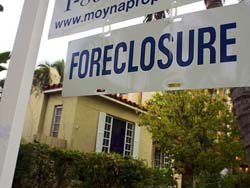
Foreclosure HomesIn foreclosure auctions there are winners and there are losers. If you are careful you can end up with a winner and walk away with a home at 20-50% off the price. Or, you can get carried away in a bidding frenzy and purchase a property at just a small discount. In the latter case you may wind up with a house you should not have bought in the first place...



You can get a real steal at a house foreclosure sale—or you can overpay for a money pit. Here’s how to avoid the latter.

Step 1: Know your actions

Know your auctions. At a sheriff’s, trustee’s, or courthouse auction, you can’t inspect the property in advance; no information is provided on the property; you’ll need to pay much or all of your bid on the spot, in cash or a cashier’s check; and it will be your problem to evict the tenants! But this is where you’ll find the deep discounts.

Step 2: Play it safe

If you want to play it safe, go to an auction house sale. The bank already owns these properties (so you won’t have to kick anyone out), and you’re usually allowed to inspect the premises beforehand. But this comfort level comes at a price—you’ll typically pay 90% to 95% of the market value.

Step 3: Expect the worst

Expect the worst with any house you buy at auction. If a homeowner couldn’t afford his mortgage, it’s reasonable to expect he wasn’t keeping up with maintenance and repairs, either.

TIP: Be aware that homeowners who are forced out of their houses sometimes express their bitterness by taking with them anything that isn’t nailed down, leading to huge (and unanticipated) repair bills for the new owner.

Step 4: Do a drive-through

Drive through the neighborhood of any foreclosed home you’re considering. If the area is teeming with foreclosure signs, prices are likely to fall even farther. It also may be the sign of an area on the decline.

Step 5: Check what you can

Check out as much as you can about the house in advance of the auction. If you’re allowed to do an inspection, take a contractor with you; he’ll be able to give you a ballpark number on the repairs you’re looking at. Check if there are any liens on the home. Review the title search. Know what other homes in the area are worth.

Step 6: Have cash

Be prepared to pay on the spot a 5% deposit, in cash or a cashier’s check, if you have the winning bid at an auction house sale. At a sheriff’s sale, you might have to pony up the full amount.

TIP: Have realistic expectations. Banks aren’t in the business of giving away homes, so if a price sounds too good to be true, it probably is.

Step 7: Come with pre-approved financing

Come with pre-approved financing, even if the auction doesn’t demand it. If you make the winning bid and then find you can’t get financing, you’ll still be legally responsible for paying 25% of your bid!

Step 8: Look affluent

Attend the auction in your most expensive clothes. It will trick other buyers into thinking there’s no point in getting into a bidding war with you.

Step 9: Set a limit

Set a limit as to what you’ll bid so you don’t end up overpaying for a house simply because you got caught up in the heat of the moment.

Step 10: Avoid nasty surprises

Know the rules of your auction. If you win a bid, do you have time to change your mind, or will you have to pay a penalty if you back out? Is there a “reserve amount”—an amount below which the owner does not have to sell, even if you won the bidding? Is there a “buyer premium”—an additional 5% to 10% you have to pay the auction house?

Step 11: Jump right in

Jump right in when the bidding starts—assuming you like the house. Homes sold at the beginning of an auction typically go for less money than those sold at the end.

FACT: Due to the 2007 real estate market crash, the Senate voted to give a $7,000 tax credit to anybody who buys a foreclosed home. Check with your tax advisor for details.

Watch this MSNBC video with expert tips for those venturing into real estate auctions. The real estate expert explains the best techniques from how to dress for maximum effect to how to keep your emotions in check and when to make your bid for that dream home…


Daytona Beach Foreclosures


Port Orange Foreclosures


Ormond Beach Foreclosures


New Smyrna Beach Foreclosures


Ponce Inlet Foreclosures


Read full post >>
Spruce Creek News
Spruce Creek Fly-in Information site
What's My Spruce Creek Home Worth?